Castles in Silesia: ruins of the Eagles' Nests on the Jura, the castles of Racibórz and Będzin, and Renaissance seats in Cieszyn Silesia.
Strongholds, fortified manors and palaces lie across the Silesian Voivodeship, from the Kraków-Częstochowa Upland to the edge of the Beskids. Some are ruins on rocks, some are rebuilt museums and hotels, and a few still wait for a new owner. This is a selection for people who want to see medieval walls, Renaissance courtyards and the parks of old noble families, and to choose a destination for a day.
Which castles in Silesia should you visit first?
On a first trip start with three places: the ruins at Podzamcze on the Jura, the Piast castle in Racibórz and the castle in Będzin. Each belongs to a different era and offers a different kind of visit, and together they show how varied the local strongholds are.
The Ogrodzieniec Castle ruins at Podzamcze crown Castle Hill, the Kraków-Częstochowa Upland's highest rise, and can be explored as a stabilised ruin. The castle in Racibórz rises on the Ostróg, once an island in an Oder meander, and holds a Gothic chapel of St Thomas, a museum, a dungeon in its tower and a brewery. The castle in Będzin was raised on Castle Hill above the Czarna Przemsza on the orders of Casimir the Great in 1349, and its present form owes much to the rebuilding of 1952-1956.
There are several dozen castles, so it is easier to plan by town. Sosnowiec has the most in one place, with several each in Tarnowskie Góry, Będzin, Racibórz and Zawiercie. Details are on the pages for Sosnowiec and Tarnowskie Góry.
Which ruins on the Jura are worth seeing?
The best ruins lie in the Eagles' Nests system on the Kraków-Częstochowa Upland. These are fourteenth-century castles built on the orders of Casimir the Great, set into limestone rock and now in varied condition. They can be joined into one trip on foot or by car.
Alongside Ogrodzieniec the best known are Bobolice, where a castle of the mid-fourteenth century was rebuilt from ruins and opened in 2011, and nearby Mirów, whose walls were incorporated into natural rock. The Tygrys rock in Skarżyce, a district of Zawiercie, carries the ruins of Bąkowiec, which is also known as the castle at Morsko. Olsztyn near Częstochowa keeps the ruins of a royal castle that appear in the register of monuments, and at Smoleń the Gothic walls and the round tower of the upper castle have been secured and open to walkers since 2015; the building lies within a nature reserve. Ostrężnik Castle deserves a short mention too: only the rock, fragments of walls and ramparts remain, and its history is poorly known.
You cannot visit the watchtower at Łutowiec at all: a short stretch of wall is all that is left, and the site is in the register of monuments. It is worth knowing about if you read about local history, but choose another stop for a trip.
Where can you see Piast and town castles?
Piast and town castles stand in towns, so you reach them without a long walk. Most house museums or cultural institutions.
In Gliwice the Piast Castle is a brick building of the fourteenth century on Pod Murami Street, run since 1960 as a museum branch with a display on the town's past. The name misleads, because it was never a ducal seat. In Toszek the Gothic castle of the fourteenth and fifteenth centuries, rebuilt in the seventeenth, is home to a cultural centre, and in Siewierz the bishops' castle is a preserved ruin of four wings around a courtyard with a five-storey tower. In Sosnowiec Sielecki Castle is the oldest building in town and houses the Sosnowiec Art Centre. In Racibórz it is also worth seeing the Renaissance tower of around 1574 that once held prisoners and is now an emblem of Racibórz.
Which castles and manors stand in Cieszyn Silesia and the Beskids?
Cieszyn Silesia has mostly Renaissance fortified manors and palaces, often turned into hotels and cultural centres. They have a calm, almost rural character and suit a short outing.
Grodziec Castle (Jasienica commune), of the fifteenth and sixteenth centuries, is described as never having burned or fallen into ruin, and has a neo-Gothic chapel, a park and a museum. Kończyce Małe Castle is a Renaissance fortified manor with an arcaded courtyard, considered the only one of its kind in Cieszyn Silesia, now with a hotel, restaurant and Regional Room. Dzięgielów Castle near Goleszów is a hotel today, while around the Kończyce Wielkie palace spreads a landscaped park with an artificial pond. In Zebrzydowice a Baroque palace stands on the site of a former Gothic castle and houses a municipal culture centre. In Czaniec a fortified manor of the early seventeenth century with a terrace and bastions stands just beside the border of the Silesian and Lesser Poland voivodeships, and in Wisła the Zameczek is a modernist residence of Polish presidents from 1929-1930, visited in guided groups by prior arrangement.
In which places are most of the castles?
Castles and palaces form a group of four in Sosnowiec, and Tarnowskie Góry has three. Będzin, Racibórz, Zawiercie, Gliwice, Żywiec, Ruda Śląska and Zabrze have two each. The rest are scattered across small places: Podzamcze, Bobolice, Olsztyn, Mirów, Smoleń, Siewierz, Toszek, Chudów, Kobiór, Grodziec, Bytom, Świerklaniec, Ostrężnik, Zebrzydowice, Kończyce Małe and Żory.
That is why it pays to join them into trips: Jura ruins around Zawiercie and Częstochowa, Dąbrowa Basin palaces in Sosnowiec and Będzin, Piast castles in Upper Silesia. The seats of Cieszyn Silesia form a separate, quiet cluster.
Which palaces and manors can you visit in the conurbation and on the Jura?
Palaces in the conurbation began as residences of manufacturers and aristocrats and are now museums, offices or buildings under renovation. For that reason check before a visit whether the interiors are open.
Sosnowiec has two: the Dietel Palace, a neo-Baroque residence of a manufacturing family, and the Franz Schön Palace, where the Silesian Uprising's command sat in 1919 and which today serves as a district court. In Będzin the Mieroszewski Palace of the early eighteenth century has painted ceilings and a park and belongs to the Zagłębie Museum. In Świerklaniec the Cavalier's Palace of 1903-1906 is a neo-Baroque guest house of the Donnersmarck family, and in Nakło Śląskie the Donnersmarck Palace of 1856-1858, set in a park by Lenné, houses the Centre of Silesian Culture. At Kobiór on Lake Paprocany the hunting lodge at Promnice of 1861 is being revitalised, while the late Baroque palace of 1796 in Rybna, a district of Tarnowskie Góry, is run today as a cultural institution. In Stare Tarnowice a Renaissance castle was restored and opened to visitors in 2011. In Żywiec the Habsburgs' New Castle, built in 1871-1885, stands next to the castle park.
The castle at Chudów has been only partly rebuilt from a Renaissance ruin and keeps a museum in its tower; at Danków the seventeenth-century bastion fortress survives as ruins, with the church of St Stanislaus inside the fortifications. Smaller residences are seen mostly from outside. The neo-Gothic palace at Czernica of 1865 is surrounded by a park of lime, maple and chestnut trees. The classicist palace in Żory-Baranowice was restored after years in ruin and has a park with monumental oaks. The manor at Łodygowice, from the early seventeenth century and rebuilt in neo-Gothic style in the nineteenth, houses a register office and a Polish-Slovak cooperation centre today.
Where is there a museum, a hotel or a concert in a castle?
Many old strongholds changed their role and now live as cultural centres, hotels or museums. So you go to a castle not only for sightseeing but also for an exhibition, a classical concert or a night's stay.
Photography and artist's-book shows and festivals are the speciality of Sielecki Castle in Sosnowiec. The palace in Rybna, Tarnowskie Góry, stages classical concerts, exhibitions and meetings with artists, and also offers catering and rooms. In Stare Tarnowice the Centre of Art and Old Crafts has operated in the castle since 2011. In Nakło Śląskie the Centre of Silesian Culture occupies the Donnersmarck palace with a museum, exhibition and educational character. Racibórz offers a museum, a dungeon and a brewery within one castle; Będzin's castle is also open and holds a museum. In Dzięgielów and Kończyce Małe you can stay overnight within historic walls.
How did the main castles change over time?
The castle at Podzamcze grew out of fortifications that probably appeared as early as the twelfth century, and from a wooden stronghold it became a magnate's residence. Fortifications at Będzin go back to the ninth century, when a fortified settlement was raised there, and Casimir the Great added the castle to an older stone tower in 1349. The Racibórz stronghold is known from the chronicle of Gallus Anonymous, and the brick buildings arose later on the Ostróg.
In Wisła the Zameczek was built in 1929-1930 for President Ignacy Mościcki, and earlier a larch hunting lodge finished in 1907 stood on the slope of Zadni Groń. The castle in Siewierz was for over three hundred years the residence of the bishops who ruled the Siewierz duchy.
Are there older strongholds and sites without walls?
Besides castles there are traces of early medieval strongholds, where ramparts and moats remain. The stronghold at Międzyświeć was a settlement of the Gołęszyce tribe in use from the seventh to the end of the ninth century. The stronghold in Lubomia, of the eighth and ninth centuries, lies in the Grabówka forest, has a double ring of ramparts and is among the largest in the voivodeship.
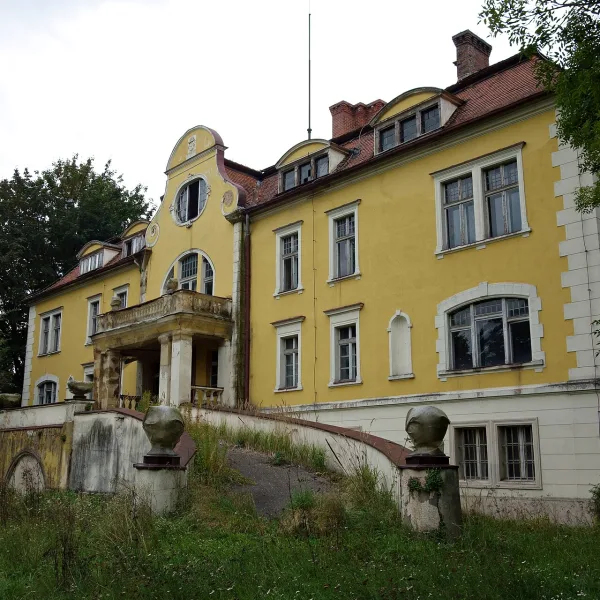
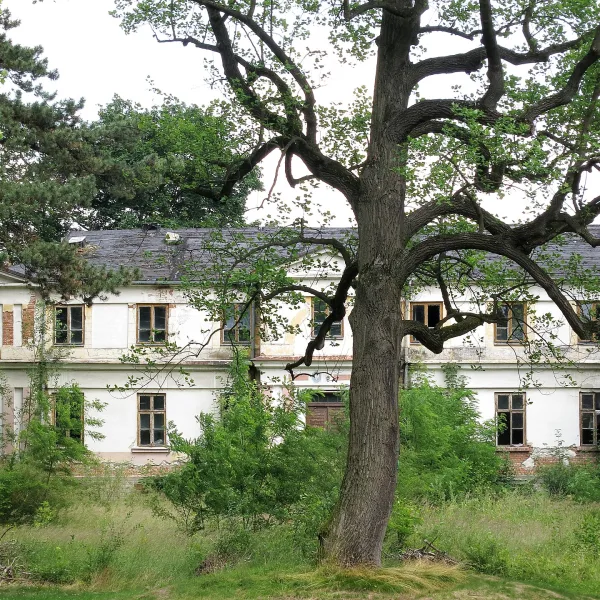
Some sites were destroyed and survive only in fragments. The Tiele-Winckler Palace in Bytom-Miechowice burned in 1945; only an outbuilding, about a tenth of the former bulk, and a park remain. The Dembiński Palace in Szczekociny, of 1794, has stood unused for decades and in poor technical condition.
How to plan a castle trip
Plan by region: one day for the Jura ruins, another for the Piast castles in Racibórz and Gliwice, and a weekend in Cieszyn Silesia with a night in one of the castle hotels. Check opening before you go; ruins in particular may be viewable only from the outside.
Frequently asked questions
Which castle is the biggest?
The site's manager calls the Ogrodzieniec ruins at Podzamcze the largest castle complex in Silesia.
Where can you see a rebuilt castle?
At Bobolice, where the castle was rebuilt from ruins and opened in 2011, and at Będzin, rebuilt in 1952-1956.
Can you stay overnight in a castle?
Yes. Hotels operate in the castles at Dzięgielów and Kończyce Małe.
Is the Zameczek in Wisła open?
It is visited in guided groups by prior arrangement.
Which sites are only ruins or no longer exist?
Ruins include Ogrodzieniec, Mirów, Olsztyn, Smoleń and Ostrężnik. The watchtower at Łutowiec is now only a fragment of wall.

 Historic sites