Sculpture in Silesia: monuments, benches and street art in over a dozen towns, from Katowice to Bielsko-Biała. See where to find bronzes and cast-iron lions.
Walking from one sculpture to the next is a way to get to know the region through the people who shaped it: poets, doctors, footballers, miners and princes. The works stand on market squares, in parks and in housing estates, so they fit easily into an ordinary city walk.
What sculptures and monuments can you see in Silesia?
The region has monuments to important figures, bronze benches that let a passer-by sit beside the figure, cast-iron lions from local foundries, mining sculptures and a few humorous works. Bronze dominates, but you will also meet granite, steel, concrete, sandstone and cast iron.
Most sculptures are concentrated in Katowice, especially in Śródmieście, followed by Chorzów and Częstochowa. Individual interesting works turn up in small places such as Bystra, Jaworze, Koszęcin and Kończyce Wielkie.
Which sculptures and monuments are worth seeing in Katowice?
Katowice has the densest network of monuments in the region. Eighteen sculptures stand in various districts, ten of them in Śródmieście alone, so a walk through the centre takes time.
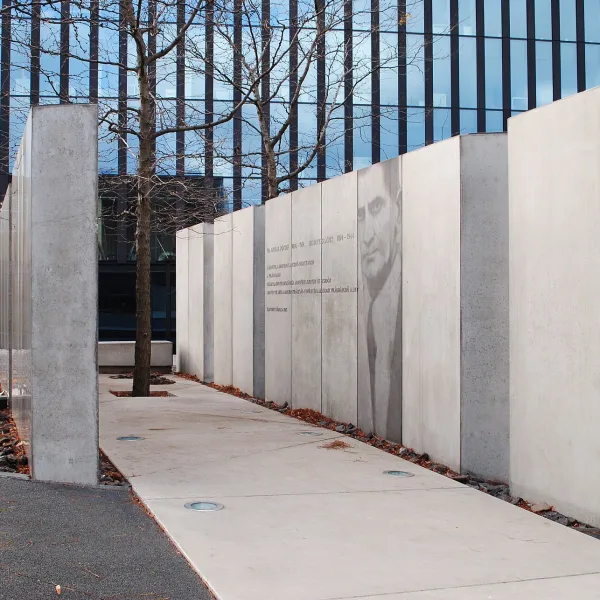
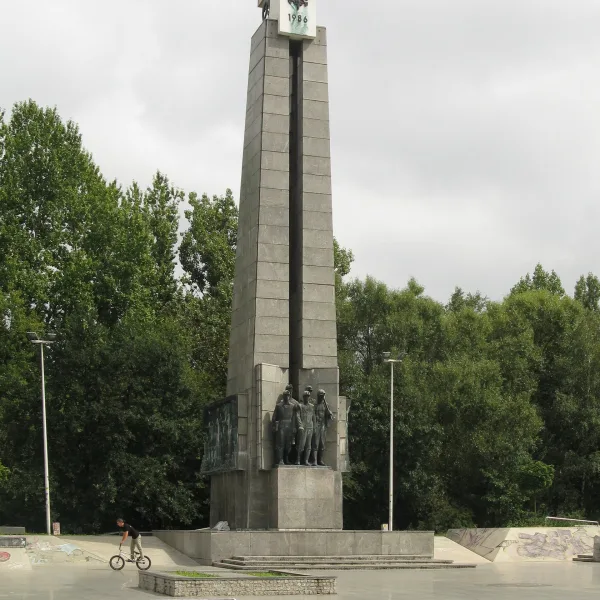
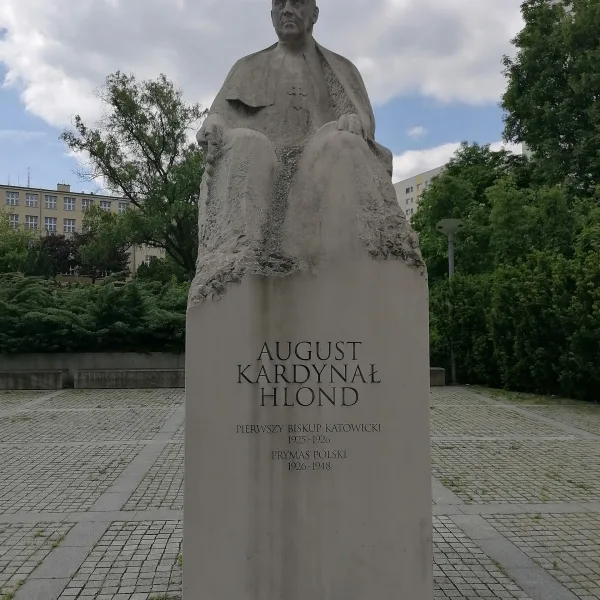
Before the Silesian Voivodeship Office, on Bolesława Chrobrego Square, Józef Piłsudski rides a horse: a Croatian sculptor designed the work of 1937-1939, and Katowice saw it only in 1993, after more than half a century of wandering. At the Jagiellońska and Lompy end of the same square rises the Obelisk of the Silesian Eagles of 1984, topped by two eagles in flight. On Silesian Parliament Square stands the Monument to Wojciech Korfanty, carved by Zygmunt Brachmański in 1999, and in the Silesian Insurgents' Park the Monument to General Jerzy Ziętek, a bronze statue on granite unveiled in 2005. At the crossing of Wita Stwosza and Jordana streets, beside the seminary, sits Cardinal August Hlond with a rosary in his hand: a four-metre sandstone sculpture unveiled on 5 July 2016.
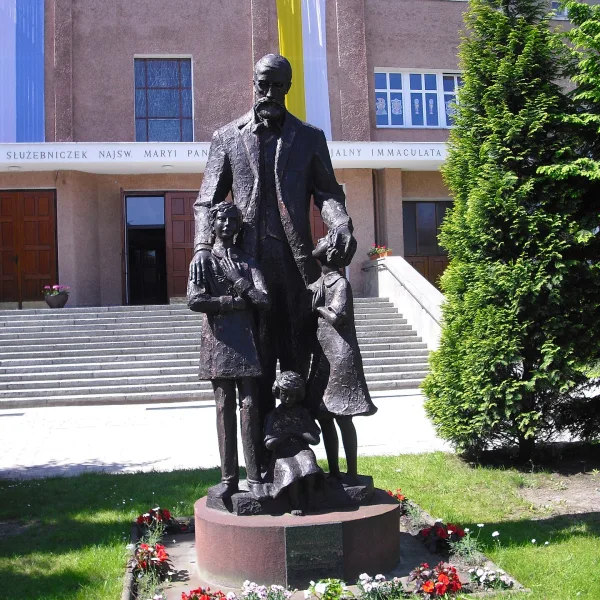
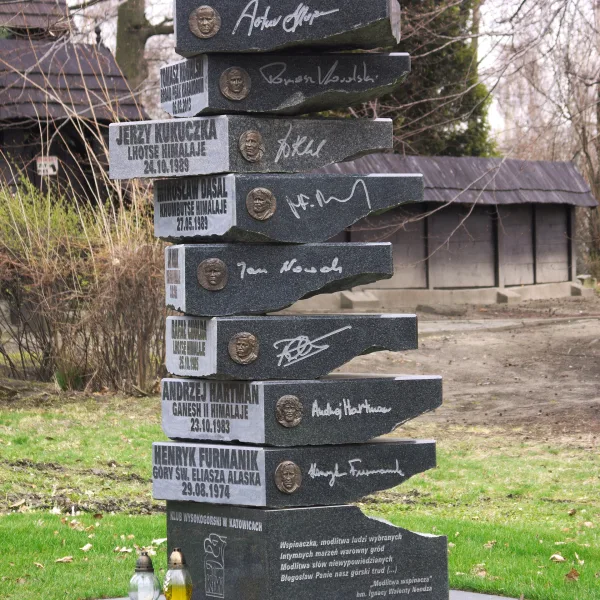
Lighter accents are the Bluesman Monument over Mariacka Street, a figure with a guitar hung on cables five metres above passers-by, and the Bench of Stanisław Ligoń by the radio station building. In the districts you will find the Monument to the Polish Soldier by Bronisław Chromy from 1978, the "Family" Monument on Grunwaldzki Square in Koszutka with a mosaic recreated in 2016, the Bolesław Szabelski Bench in Ligota, the Monument to Edmund Bojanowski in front of the convent in Panewniki and the Alpinists' Monument in Kościuszko Park, an obelisk of 2015 by Bogumił Burzyński, in memory of eight members of the Katowice alpine club killed on peaks. In Załęże, at Gliwicka 107, hides Cukerzołza, a small bronze bebok with a cake and a wand, one of over a hundred figures in Grzegorz Chudy's series.
More about the regional capital: sculptures in Katowice.
Where to look for sculptures in Chorzów?
Chorzów has eight sculptures, mostly inside the Silesian Park or close to its edge. It is a good target for a walk, because the distances are short.
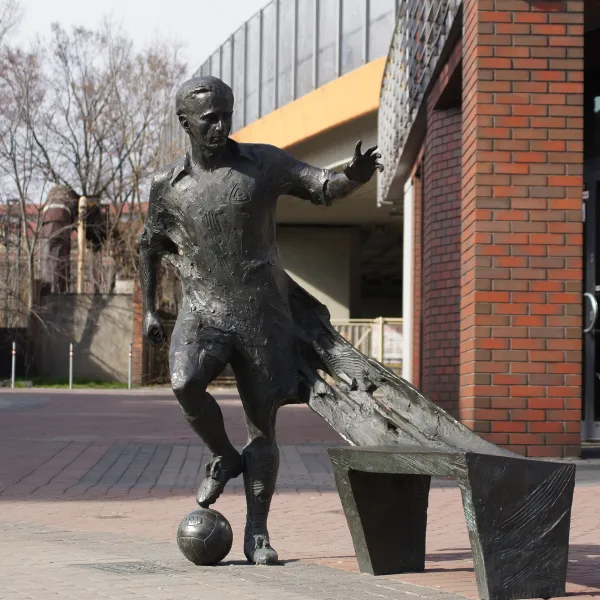
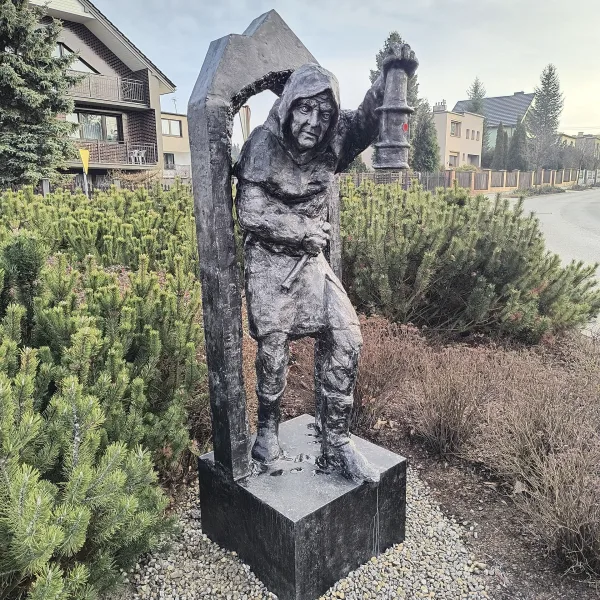
Beside the planetarium stands the Monument to Nicolaus Copernicus, unveiled in 1964. The granite astronomer with a globe in his hand, by Jerzy Bandura, resembles a sundial together with its round platform and measures about four metres. In the park you will also see the sculpture "Miners" by Marian Wnuk from 1965, showing two helmeted miners with lamps, about three metres tall, and the Bench of Karolinka and Karlik in the Rosarium, where a pigeon perches on the back of the bench. Hutników Square is graced by a 2002 reconstruction of the Monument to Friedrich Wilhelm von Reden, originally of 1853, which honours a Prussian official linked with the growth of mining and ironworks. The footballer Gerard Cieślik is commemorated by two monuments: a bench on Wolności Street from 2014 and a bronze figure in front of the Silesian Stadium management from 2022, in the national team kit, 1.70 m tall. Further plans: sculptures in Chorzów.
Which memorial benches are there in Silesia?
A memorial bench is a life-size sculpture beside which you can sit. The region has over a dozen, and many were set up after 2005. Authors repeat: Robert Sobociński made the Częstochowa poet (2007) and the Chorzów Karolinka and Karlik (2005), and Marek Maślaniec the benches in Koszęcin and Jaworze.
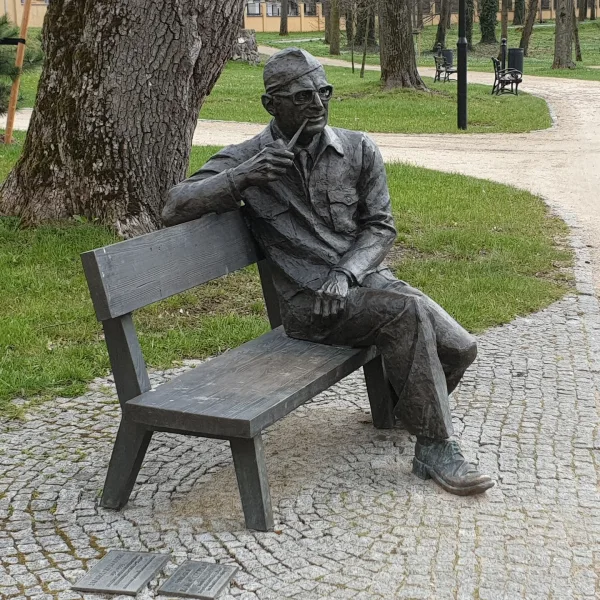
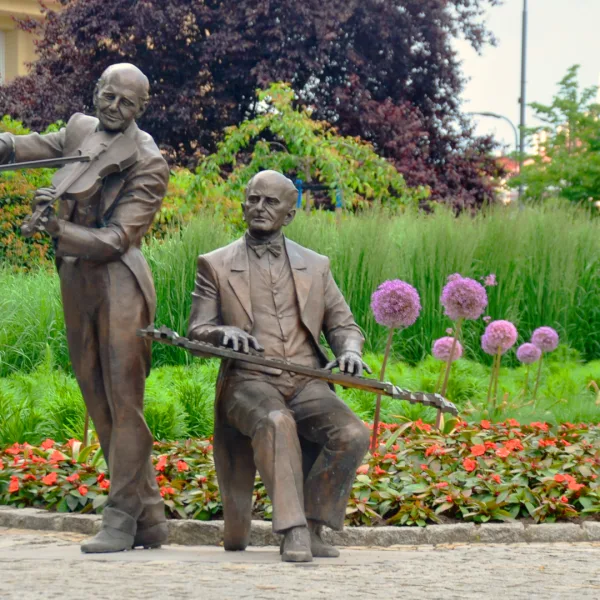
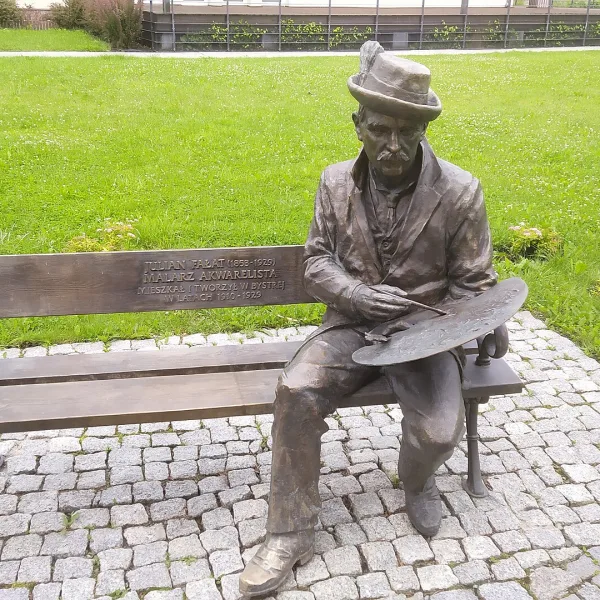
Aleja Najświętszej Maryi Panny in Częstochowa has three such spots: here the poet Halina Poświatowska has settled down with a cat at her feet, and nearby are the actor Marek Perepeczko, from 2014, and the doctor Władysław Biegański, from 2008. In Dąbrowa Górnicza, on Plac Wolności, stands the Jimi Hendrix bench with a guitar, from 2012. Pszczyna's market square is adorned by the bench of Princess Daisy, known in the town as Daisy, born Maria Teresa Olivia Hochberg von Pless, made in 2009 by the local artist Joachim Krakowczyk. In Żywiec, in the Castle Park near the Miniature Park, sits Alice Habsburg, who lived in the town in 1920-1945. In Koszęcin, in the courtyard of the palace housing the Śląsk Song and Dance Ensemble, waits Stanisław Hadyna, the ensemble's founder, and in Bystra, in front of the municipal cultural centre, the painter Julian Fałat, who lived here in 1909-1929. In Jaworze, by the trail to Błatnia, the bench of Wiesław Dymny was unveiled in 2022, and in Kończyce Wielkie the bench of Countess Gabriela Thun Hohenstein, the last owner of the local palace.
The benches show whom the region values. Pszczyna's Daisy lived in 1873-1943. Julian Fałat sits in a hat, with a palette and a brush. Hadyna is accompanied by a pipe and sheet music, and walkers heading for Błatnia stop by Wiesław Dymny, a visual artist, actor and satirist. Gabriela Thun Hohenstein was cast in bronze by the Kraków professor Karol Badyna. In Katowice-Ligota the composer Bolesław Szabelski has a marble and bronze bench with a bust in the square named after him, at the crossing of Piotrowicka and Panewnicka streets.
Where do the cast-iron and bronze lions stand?
The lions are a separate thread. They were made in Silesian foundries and recall the region's industrial tradition.
In front of Villa Caro in Gliwice, on Dolnych Wałów Street, rests the Watching Lion: an iron sculpture cast in 1824 at the Gliwice works after an idea by Theodor Kalide. In Chopin Park in front of the Municipal Palm House rests a pair: the Reclining Lions were cast in iron in 1830 after Johann Gottfried Schadow in the Gliwice foundry. On the market square in Bytom lies the Sleeping Lion, a bronze of 1873 cast in Berlin to the same Kalide's pattern. It originally topped a memorial to local men killed in the Franco-Prussian War. Years later it vanished, and it was found again in Warsaw.
Which sculptures are devoted to miners and work?
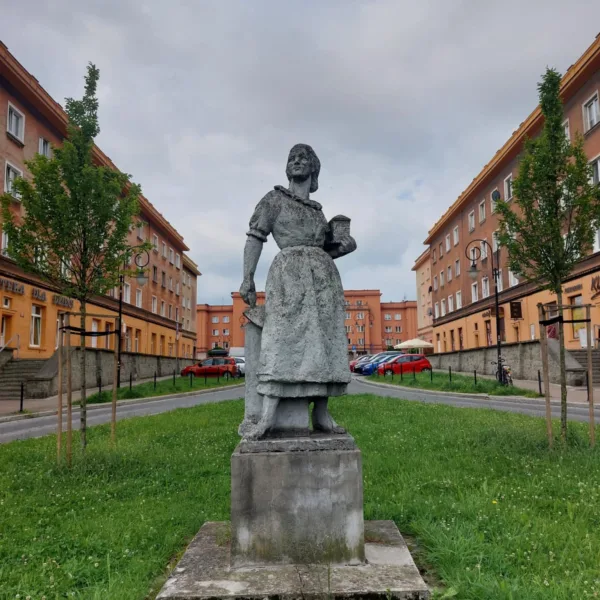
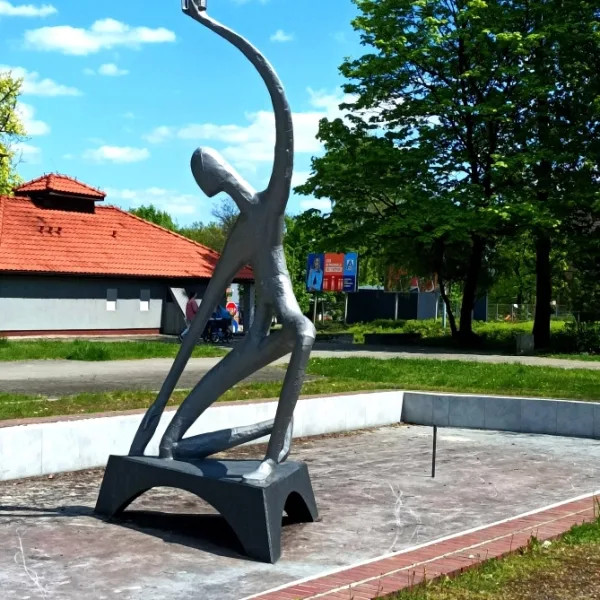
Upper Silesian industry left several working-class sculptures. In Chorzów these are the Miners already mentioned, and in Ruda Śląska on Żwirki i Wigury Square the Miner-Olympian by Piotr Latoska, made of sheet metal in 1963 and renovated in 2021; the kneeling figure holds an Olympic torch or a miner's lamp. In Tychy, on Estate A at Andersa Street, stands the Murarka by Stanisław Marcinów: a woman in a plain work dress and apron holds a model of an apartment block, and in her other hand a trowel. It was made during the building of the estate in 1951-1956 and is an example of Socialist Realism.
Which older sculptures and religious figures survive in the region?
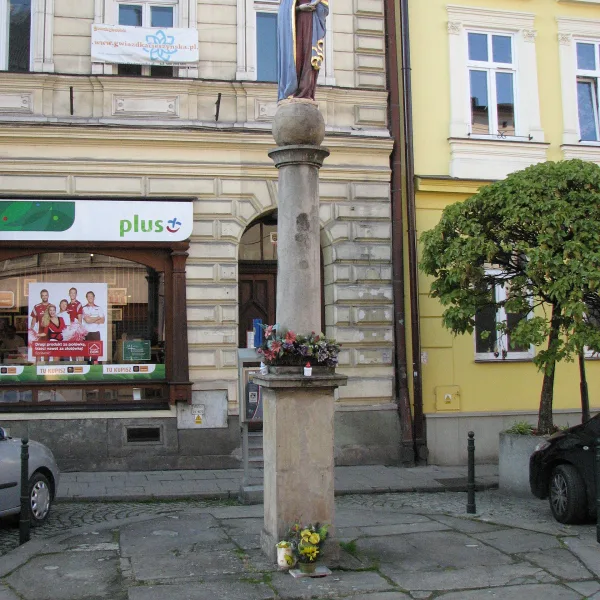
In Racibórz the middle of the Market Square is taken by the Marian Column, a late Baroque sandstone column made in 1725-1727 by Johann Melchior Österreich as a votive offering after a plague. On Mostowy Square by the Oder stands the bronze Monument to the Polish Mother by Jan Borowczak, from 1973. The Old Market in Cieszyn is decorated by the Statue of the Madonna and Child, a faithful copy of a 14th-century Gothic work; the genuine sculpture went to a museum. The prototype is linked with the workshop of Peter Parler, although art historians believe it was made by a sculptor from his studio.
Where in Silesia are the sculptures for children and contemporary works?
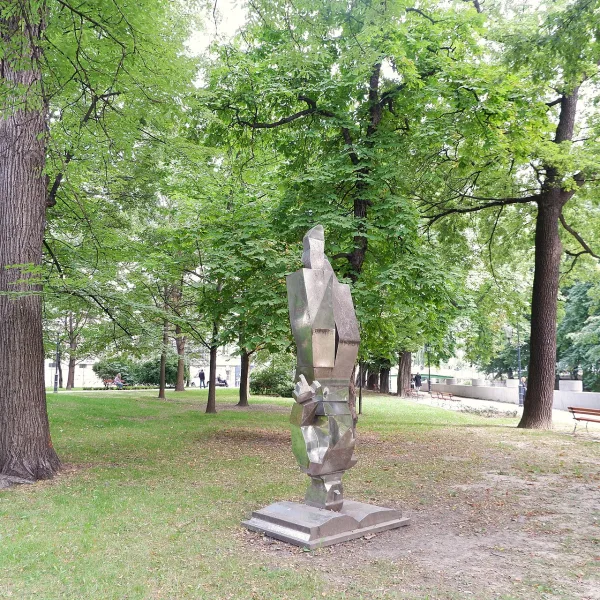
Beside the Sfera gallery in Bielsko-Biała, in a yard reached from Mostowa Street, wait Bolek and Lolek. The bronze, unveiled on 19 May 2011, is about 130 cm tall and over 250 kg, and both cartoon heroes point to the town on a globe. The film series was made at the Bielsko Cartoon Film Studio from 1963. In the park by the town hall of the same city rises the four-metre Acrobat by Dariusz Fodczuk from 2009: a steel man standing on his head on an open book. It was made as part of the international art residency "Incydenty 2009". In Katowice the bebok series adds a note of play to walks, and a bluesman hangs above Mariacka Street.
How to plan a walk among the sculptures?
It is easiest to pick one town. In Katowice the ten sculptures of Śródmieście can be joined in one long walk, and Bolesława Chrobrego Square and Silesian Parliament Square hold several monuments between them. In Częstochowa three benches stand along the same avenue. In Chorzów the monuments lie in the Silesian Park, and in Gliwice the lions are near the park and Villa Caro.
For families the benches are best, because you can sit by them and take a photo, and for history lovers the cast-iron lions, the Marian Column and the copy of the Cieszyn Madonna. Music fans will like the benches of Hendrix, Hadyna and Szabelski and the bluesman above Mariacka Street. Sculptures in Częstochowa and Tarnowskie Góry also have separate lists: sculptures in Częstochowa and sculptures in Tarnowskie Góry. The full regional overview is at sculpture in Silesia.
Frequently asked questions
Which town is richest in sculptures?
In Katowice, especially in Śródmieście. Next come Chorzów and Częstochowa, where several benches stand along Aleja Najświętszej Maryi Panny.
What is a memorial bench?
It is a life-size sculpture set up like a bench with a figure. You can sit beside it and take a photo. In Silesia such benches commemorate poets, actors, doctors, footballers and the painter Julian Fałat.
Are there lion monuments in Silesia?
In Gliwice, in front of Villa Caro and by the Municipal Palm House, and in Bytom on the Market Square, where a bronze lion stands.
Do you need a ticket to see the sculptures?
All the sculptures described here stand in public space: on squares, in parks and in housing estates. You can see them on an ordinary walk.
Where do you go to meet Bolek and Lolek?
To Bielsko-Biała, to the yard off Mostowa Street by the Sfera gallery.

 Cemeteries and monuments