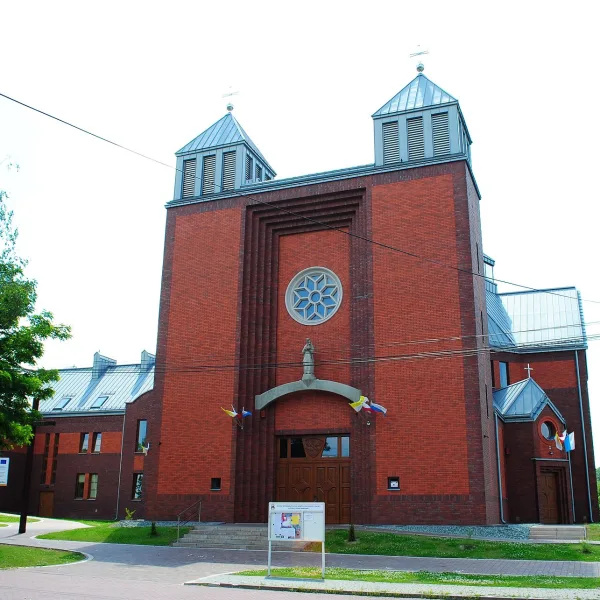
Churches and monasteries in Silesia: over seven hundred, from Jasna Góra and the Jesus Church in Cieszyn to a Romanesque rotunda and timber churches.
This guide covers places of worship across the voivodeship: diocesan cathedrals, pilgrimage sanctuaries, Lutheran churches, an Orthodox church, timber churches and post-war modernism. If you only want addresses in one city, go straight to the churches in Katowice or Gliwice pages. Here we help you decide where to begin.
Which churches in Silesia should you see first?
Start with five very different places: the sanctuary of Jasna Góra, Poland's largest Lutheran church in Cieszyn, the Romanesque rotunda on Cieszyn's hill, the Gothic abbey in Rudy and a post-war church in Tychy. This selection shows how varied the region's sacred heritage is and takes you straight to the best-known addresses.
Jasna Góra in Częstochowa is the main destination of Catholic pilgrimage in Poland: a Pauline monastery with the image of Our Lady of Częstochowa, a 17th-century fortress, a treasury and a viewing tower. The complex has Monument of History status. It needs more time than a single church.
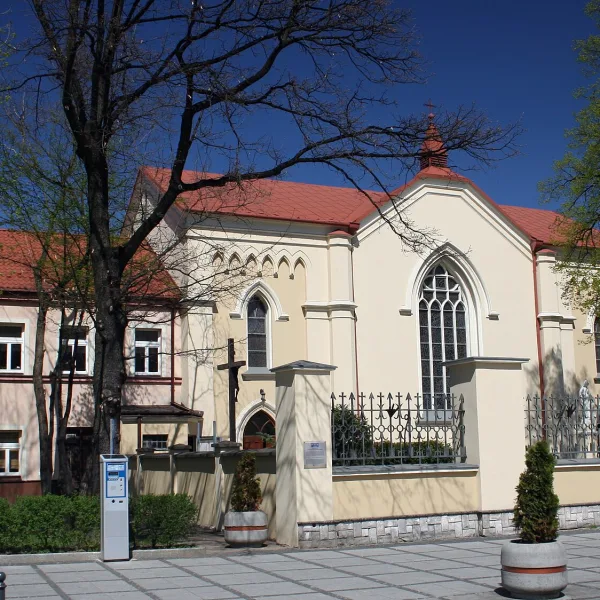
The Jesus Church in Cieszyn was built as a church of grace after the Altranstädt Convention of 1707, and its late Baroque interior is surrounded by three-storey galleries. It has 3,500 seats and can hold around seven thousand people in all. The story behind this building is told in the article The Jesus Church in Cieszyn and the Altranstädt Convention.
It is worth staying longer in the same town, because on Castle Hill stands the Rotunda of St Nicholas, one of the oldest surviving circular buildings in Poland, dated to the 11th or 12th century. It was pictured on the twenty-zloty banknote.
Where are the most important sanctuaries in Silesia?
Besides Jasna Góra the region has several sanctuaries that have long drawn pilgrims, and many remain important parishes. They are worth planning together with the sights of each town, as they usually have real architectural value and are surrounded by calvaries, monasteries and museums.
In Piekary Śląskie a neo-Romanesque basilica from 1849 is the heart of the sanctuary, with a Calvary and sanctuary museum beside it. Near Żarki the Sanctuary of Our Lady of Leśniów is a Pauline monastery with a statue of the Virgin, and in Pszów a Baroque basilica with the image of Our Lady of the Smile has drawn pilgrims from Upper and Lower Silesia since the 18th century.
In the south of the region, note the basilica and sanctuary in Rychwałd from 1756, and in Częstochowa the Pallottine Valley of Mercy at the foot of Jasna Góra, laid out on the site of a former brickworks. In Katowice-Panewniki the Franciscan basilica in clinker brick has a calvary and a yearly nativity scene.
Which cathedrals are worth seeing?
Several dioceses operate in the region, each with its own cathedral, and each building represents a different style and period. They work as a route around the big towns: from the monumental domed church in Katowice to the Gothic churches of Bielsko-Biała and Żywiec. They combine best with a walk around the centre.
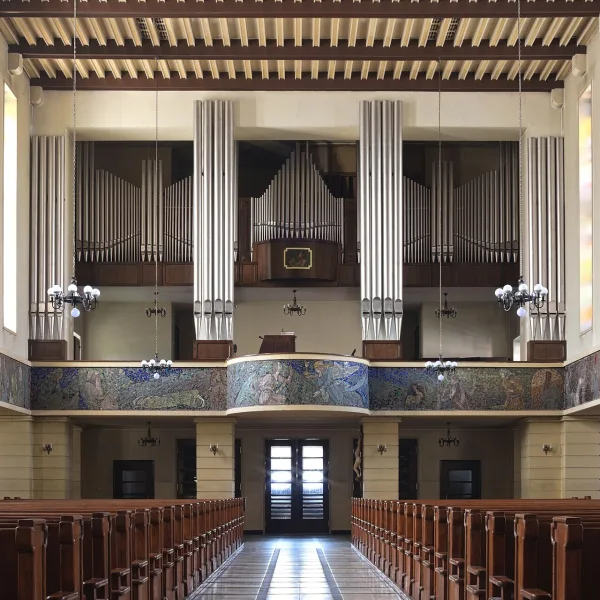
The Cathedral of Christ the King in Katowice on Plebiscytowa Street has a low dome, a portico of eight Corinthian columns, a crypt, an organ and a viewing terrace. In Częstochowa the Archcathedral of the Holy Family is a neo-Gothic three-aisled brick church, among the largest in the country, with a 101-stop organ. In Gliwice the Cathedral of Saints Peter and Paul has a 75.5-metre tower and an organ from 1899.
In Bielsko-Biała St Nicholas Cathedral began as a 15th-century Gothic church and owes its present look to a rebuilding of 1909-1912 to a design by Leopold Bauer. The same diocese includes the co-cathedral in Żywiec, a Gothic church with a Renaissance tower. In Sosnowiec, step into the cathedral on Kościelna Street for the Young Poland polychrome by Włodzimierz Tetmajer.
Where can you see brick basilicas and the tallest towers?
The turn of the 20th century was the age of great brick churches here, built for the fast-growing parishes of industrial towns. They are good goals for anyone interested in neo-Gothic architecture who would also like to get to know less obvious towns. Many dominate their surroundings with the height of their towers.
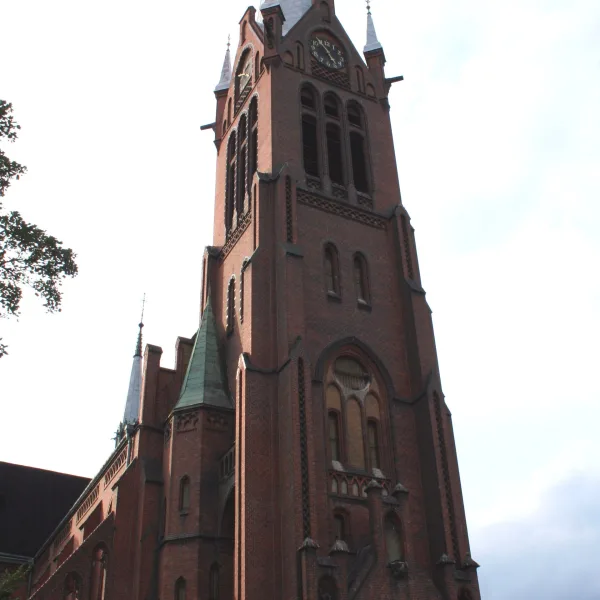
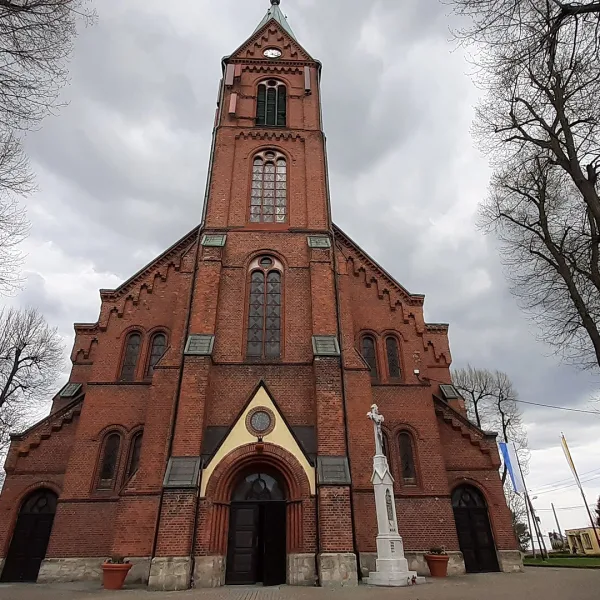
The tallest is the Basilica of St Anthony in Rybnik from 1903-1906, whose towers reach 95 metres. In Dąbrowa Górnicza the Basilica of Our Lady of the Angels has three towers on its façade, the main one 86 metres high. In Zawiercie the red-brick collegiate basilica has a twin-towered front, and in Mikołów the Basilica of St Adalbert is an older, neo-Romanesque three-aisled church with a Haas organ.
Which churches are the oldest and most unusual?
Beyond the great basilicas, look for buildings that stand out through their history rather than their size. They include a former abbey, timber churches, a church that began as a sports hall and post-war experiments in concrete. This is the most interesting group for anyone who has already seen the main cathedrals.
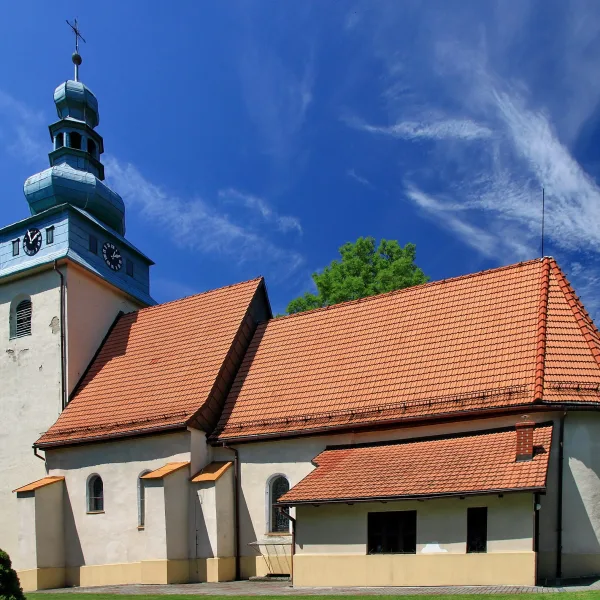
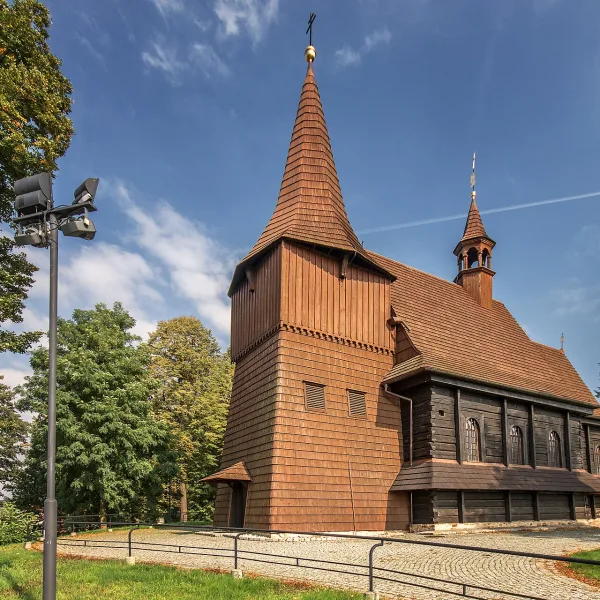
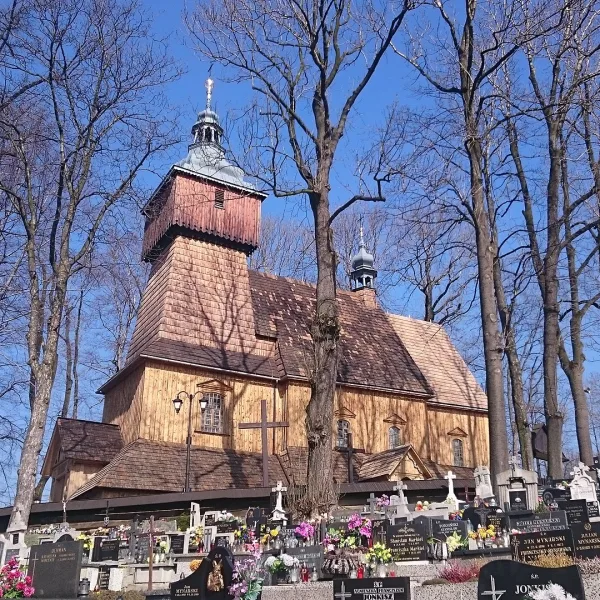
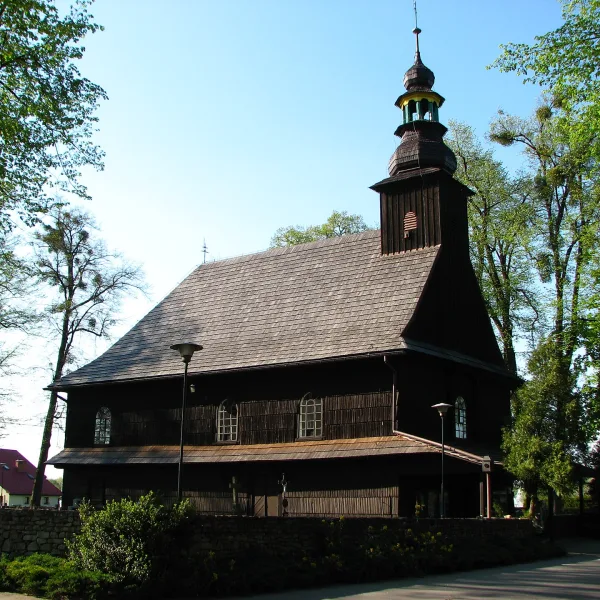
In Rudy the Gothic basilica of the former Cistercian abbey, built in brick around 1300, has Baroque chapels and now serves as a parish church and diocesan sanctuary of Our Lady of Humility. In Jankowice the Corpus Christi Church is a timber building from around 1670 with shingled arcades. Twentieth-century timber is represented by the Church of Our Lady of Fatima in Istebna, in a clearing on the Main Beskid Trail and rebuilt after a fire in 2013. There is more about such buildings in The Wooden Architecture Trail in Silesia and in Churches That Moved House.
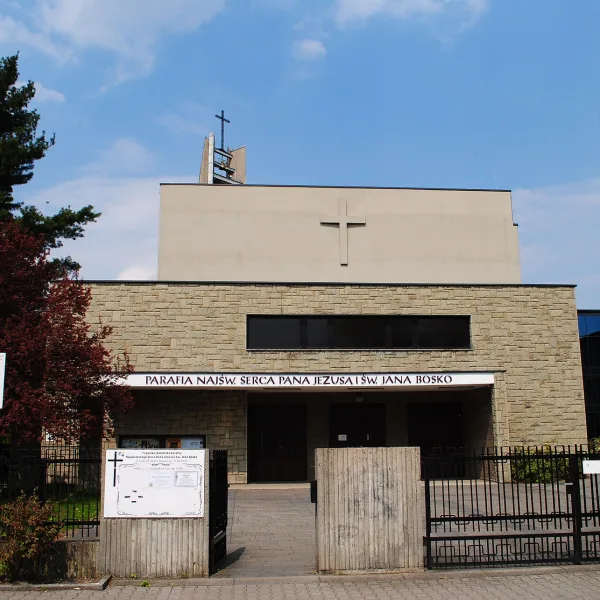
A real curiosity awaits in Bytom: the Jesuit Church of the Sacred Heart of Jesus was built in 1925 as a sports hall and became a church in 1928. In the same city the church in Szombierki holds the crypt of Karol Godula.
Where can you see post-war sacred modernism?
For anyone interested in 20th-century architecture the region has strong options that rarely reach tourist guides. Reinforced concrete, concrete pillars and bold shapes can be seen in several towns here, and some of these churches are already listed monuments.
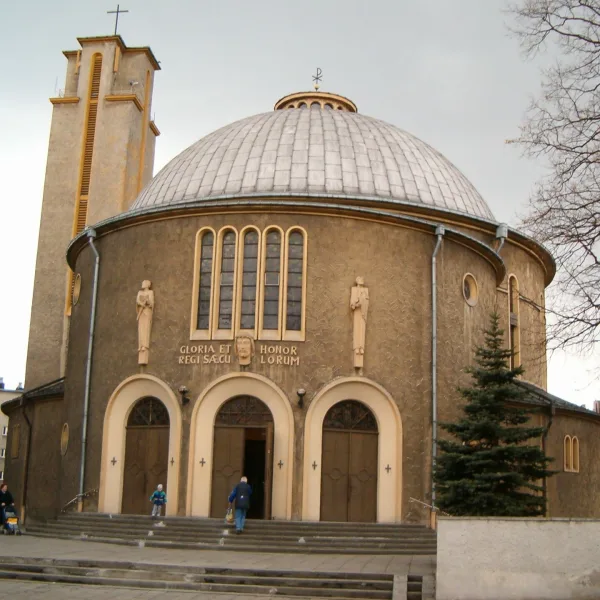
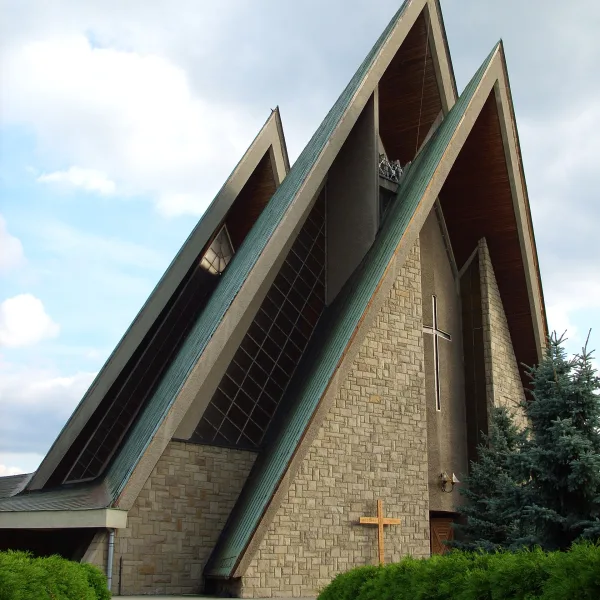
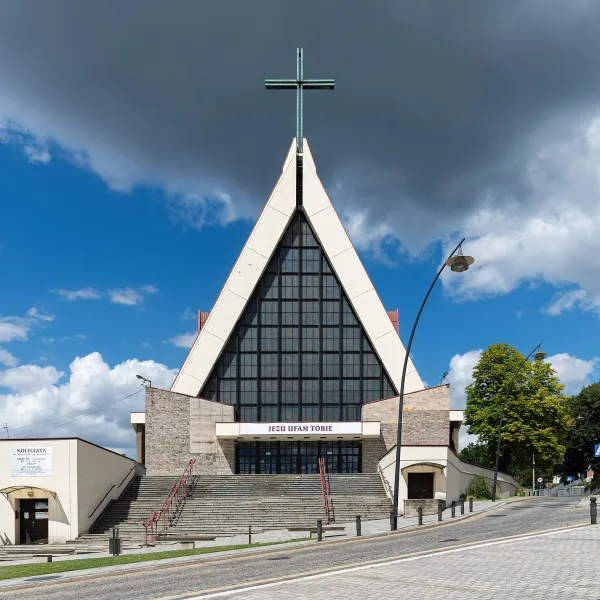
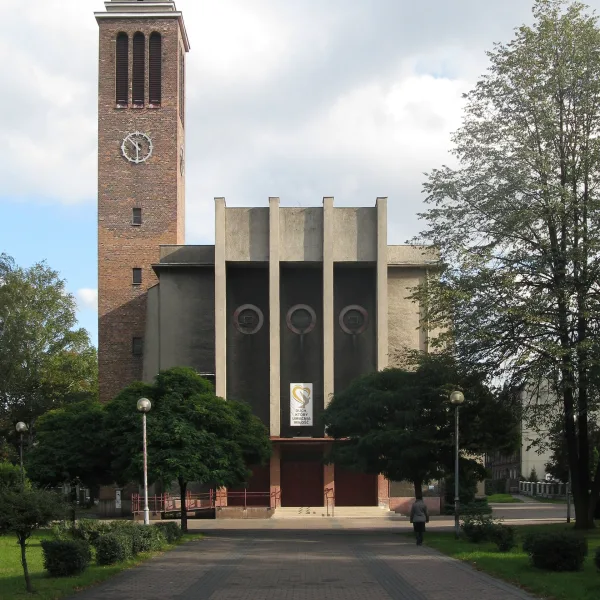
The best known is the Church of the Holy Spirit in Tychy by Stanisław Niemczyk, built in 1978-1982, with polychrome by Jerzy Nowosielski. In Gliwice the Church of Christ the King is an earlier reinforced-concrete basilica from 1934-1935, shaped to recall a ship. In Bielsko-Biała the Church of the Most Sacred Heart of Jesus from 1981-1986 stands on 82 concrete pillars, and in Knurów the Church of Our Lady of Częstochowa was designed by Adam Lisik. The article Timber Churches of the 20th Century covers related ground.
Which churches in Katowice are worth adding to your plan?
After the cathedral and Panewniki, Katowice has a few more addresses linked to religious orders. On Sokolska Street stands the Dominican Friary, founded in 2012 at the Parish of the Transfiguration. In Koszutka the Oblates run a parish and monastery church from 1936-1937, extended in 1957 and 1999. Rybnik shows a similarly quiet side of the region: in Boguszowice Stare stands a neo-Baroque church designed by Józef Rosół, a listed monument, and in the Tarnowskie Góry district of Strzybnica a parish church from the late 19th century was enlarged around 1960.
Lutheran and Orthodox churches
The religious map of the region is not limited to Catholic churches. The Lutheran heritage of Cieszyn Silesia matters most, with a long tradition and strong parishes, but churches of other denominations can also be found in big towns. It is worth seeing at least one such address to understand the region's history better.
Apart from the Jesus Church, the story of local Protestants is told in Lutherans in the Beskids. In Częstochowa, a town associated with the Catholic sanctuary, stands the modern Orthodox Church of Our Lady of Częstochowa designed by Michał Bałasz. A neighbouring category is Cemeteries and Monuments.
How can you choose churches in your own town?
Big towns have separate pages with their own selections, so on a short stay it is easier to begin there than with a list covering the whole voivodeship. Most churches are described in Katowice, and Gliwice, Bytom, Częstochowa, Zabrze and Bielsko-Biała each have well over a dozen. In all of these you will find buildings from different periods.
In Gliwice, beside the cathedral, see the Jesuit church on the Kopernika estate, a diocesan sanctuary since 2020, and the church in Trynek from the 1980s. In Bytom a good example is the neo-Baroque Corpus Christi Church in Miechowice, with a 47-metre tower. In Ruda Śląska, step into the church in Halemba with its rosary frescoes on the ceiling.
There are also lists for Częstochowa, Zabrze, Bielsko-Biała, Dąbrowa Górnicza, Chorzów and Cieszyn. In Świętochłowice-Chropaczów a neo-Romanesque church was rebuilt after a fire in 1975, in Imielin a neo-Gothic church was raised from dolomite blocks, and in Istebna the masonry Church of the Good Shepherd from the late 18th century is decorated with works by Jan Wałach.
Frequently asked questions
What is the most famous church in Silesia?
The best-known site is Jasna Góra in Częstochowa, the main destination of Catholic pilgrimage in Poland. Among Lutheran churches that role belongs to the Jesus Church in Cieszyn.
What is the tallest church in Upper Silesia?
Among the tallest is the Basilica of St Anthony in Rybnik, whose towers reach 95 metres. The basilica in Dąbrowa Górnicza, at 86 metres, and the cathedral in Gliwice, at 75.5 metres, also have very tall towers.
Where can you see interesting churches in Katowice?
The most important are the Cathedral of Christ the King in the city centre and the Franciscan basilica in Panewniki. It is also worth visiting the Dominican friary on Sokolska Street and the Oblate church in Koszutka.
Where can you see timber churches in Silesia?
Look for them along the Wooden Architecture Trail. Good examples are the Corpus Christi Church in Jankowice from the 17th century and the 20th-century Church of Our Lady of Fatima in Istebna.

 Churches and monasteries