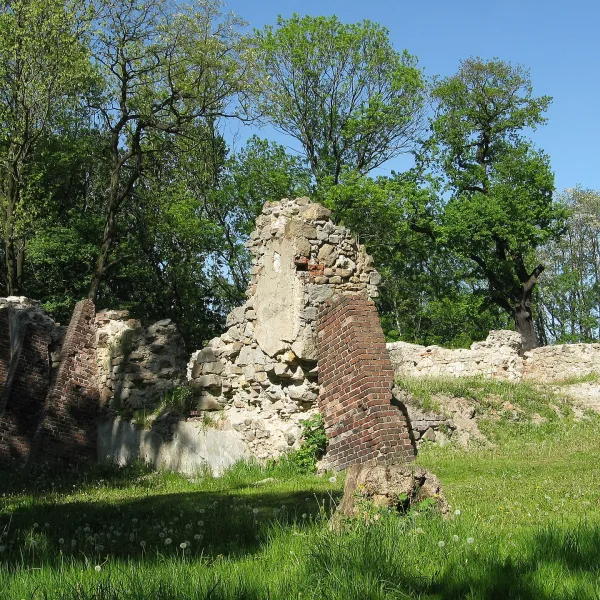
Historic monuments in Silesia: nearly three hundred, from the ruins of Ogrodzieniec Castle and upland fortresses to industrialists' palaces and 1939 bunkers.
This guide covers secular monuments across the voivodeship, while churches and museums have separate sections. If you are only interested in castles, start with the upland. If you prefer residences, go to the section on palaces, and if you want one town, choose the page for monuments in Katowice or Gliwice.
Which castles on the upland should you see first?
The Kraków-Częstochowa Upland has the densest group of fortresses in the region, many of them part of the Eagles' Nests system. On a first trip choose two or three: one large ruin, one rebuilt castle and one lesser-known crag. You will see how differently these buildings fared, and the distances between them are short.
The ruins of Ogrodzieniec Castle in Podzamcze are the best-known stop: the village lies under Castle Hill, the highest point of the upland, and the managers describe the site as the largest castle in Silesia. Bobolice Castle gives quite a different impression, a mid-14th-century fortress rebuilt from ruins and opened in 2011. Close by stands Mirów Castle, a ruin from the time of Casimir the Great in Niegowa commune, so the two are easy to combine in one trip.
Less obvious fortresses
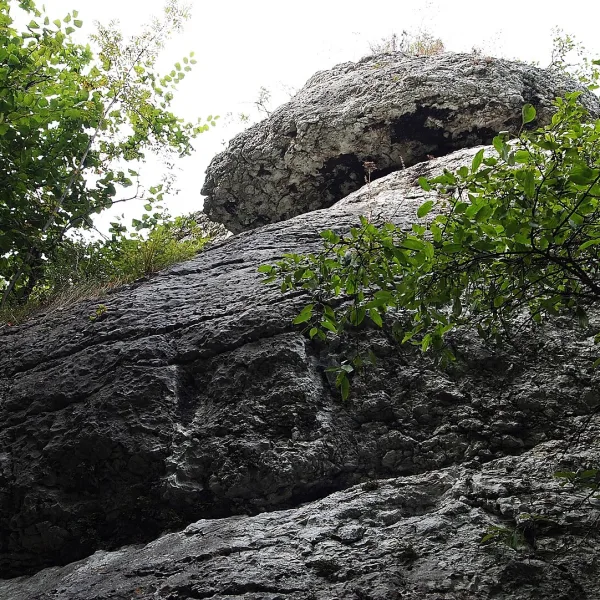
Anyone who already knows the main names can visit Olsztyn Castle near Częstochowa, the ruins of a former royal stronghold, and Smoleń Castle in Pilica commune, with a round tower on a limestone hill in a nature reserve. In Zawiercie-Skarżyce Morsko Castle, also called Bąkowiec, stands on the Tygrys rock. Least remains of the Łutowiec Watchtower: a short stretch of wall on Castle Rock, a goal mainly for dedicated enthusiasts.
Where can you see castles in towns?
Town castles are easier to visit than the upland ruins, as they usually house a museum or cultural institution and stand close to the centre. They work well in poor weather and on a short stay. The most interesting have kept their Gothic walls and now serve a new purpose.
Będzin Castle above the Czarna Przemsza is one of the most recognisable buildings of the Dąbrowa Basin, raised under Casimir the Great in 1349 and rebuilt in 1952-1956. Racibórz Castle stands on Ostróg, a former island in a bend of the Oder, with the Gothic Chapel of St Thomas, exhibitions and a castle brewery. The Piast Castle in Gliwice on Pod Murami Street is a branch of the local museum, with a display on the history of the Gliwice area.
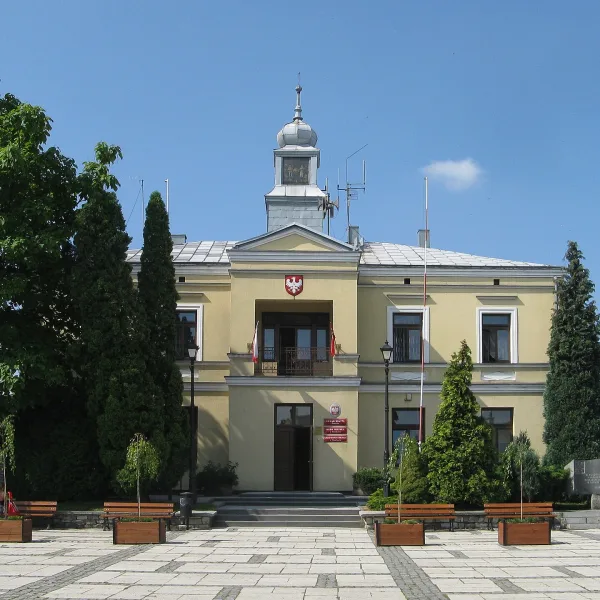
In Toszek a Gothic castle from the 14th-15th centuries, rebuilt in the 17th century by the Colonna family, now houses a Cultural Centre, and on the square nearby stands a classicist town hall from 1836. The Bishops' Castle in Siewierz was a residence of the bishops of Kraków and is now a preserved ruin with a five-storey tower. In the Jasienica valley, Chudów Castle is a partly rebuilt Renaissance ruin with a tower museum.
Which palaces in Silesia are worth seeing?
The region's palaces show who lived here and where the money came from: magnates, the dukes of Pszczyna, the Donnersmarcks and later the industrialists. Some have become cultural centres you can walk into, others serve as offices or hospitals, and a few are ruins. Check the object's card before you go to see what is inside today.
Residences of industrial families
In Katowice, on Plac Wolności, stands the Goldstein Palace, a neo-Renaissance villa of two brothers in the timber trade, now a registry office. In the Załęże district, Załęże Palace from 1886-1887 was the seat of the Giesche company's management and is now a private hospital, so you see it from outside. In Sosnowiec the Dietel Palace is a neo-Baroque residence of a family of factory owners that has kept its state rooms.
The Henckel von Donnersmarck family left the Palace in Siemianowice Śląskie, with Baroque and classicist parts, and Kawaler's Palace in Świerklaniec, a neo-Baroque guest house in a park. Of the Tiele-Winckler Palace in Miechowice in Bytom, destroyed in 1945, only an outbuilding and landscape park remain.
Manors, hunting lodges and country residences
In the south and west of the region, look for smaller residences. In Będzin-Gzichów the Mieroszewski Palace from the early 18th century, with polychromes and a park, belongs to the Museum of the Dąbrowa Basin. In Kozy the Czecz Palace has served culture since its 2011-2014 restoration, and in Pławniowice the Ballestrem Palace in Dutch neo-Mannerist style is a diocesan retreat house surrounded by a park of exotic trees.
The Promnice Hunting Palace, a neo-Gothic lodge of the dukes of Pszczyna from 1861 by Lake Paprocany, has hunting origins, as does the timber Habsburg Hunting Lodge in Wisła in Tyrolean style, home to a PTTK branch. In Tarnowskie Góry-Rybna a late Baroque palace from 1796 is now a cultural institution with concerts. In Zebrzydowice a Baroque palace houses a cultural centre and tourist information point, and the Palace in Kończyce Wielkie is surrounded by a landscape park with a pond. In Żory-Baranowice the Palace in Żory has been restored after years of ruin, and its park is known for monumental oaks.
The Palace in Sławików of the von Eikstedt family remains a true ruin, where the commune is securing the surviving walls. In Czernica you will find a neo-Gothic small palace from 1865 in a park of limes and chestnuts.
Which monuments can you see in town centres?
In town centres it pays to look up: many buildings now serving ordinary purposes date from the region's greatest period of growth. Hotels, townhouses and houses on the market square need no ticket, only a walk. They complement a visit to a museum or cathedral well and can be seen even on a short stop in town.
In Katowice, opposite the old station, stands Hotel Monopol in white clinker brick, opened in 1902. In Gliwice Hotel Diament on Zwycięstwa Street, formerly the Schlesischer Hof, is an eclectic building from 1895. In Bielsko-Biała, look for the Pod Żabami Tenement House from 1903: an Art Nouveau building with a portal decorated with two frogs in tailcoats.
In Tarnowskie Góry, at Rynek 1, stands Sedlaczek House from the 16th century, once the seat of the starosts of the Bytom lands and home to a wine bar since the late 18th century. More about this town is in The Historic Silver Mine in Tarnowskie Góry, and about Bielsko in Sułkowski Castle in Bielsko-Biała. Town selections exist for Bielsko-Biała, Bytom, Sosnowiec, Tarnowskie Góry and Siemianowice Śląskie, and within Katowice for the city centre.
Timber, parks and fortifications
Secular monuments also include buildings that fit neither the castle nor the palace pattern. The region has timber buildings on Beskid routes, pavilions in parks and fortifications from 1939. Add them to your route if you are nearby, as they say more about local history than one more residence.
By the square in Jeleśnia, the Inn in Jeleśnia from the second half of the 18th century, one of the few surviving buildings of its kind, now works as a restaurant and belongs to the Wooden Architecture Trail. In the park beside the castle in Żywiec stands the Chinese House, an octagonal 18th-century pavilion funded by the Wielopolski family. The Manor House in Łodygowice on the River Żylica has a 19th-century neo-Gothic look and houses a registry office.
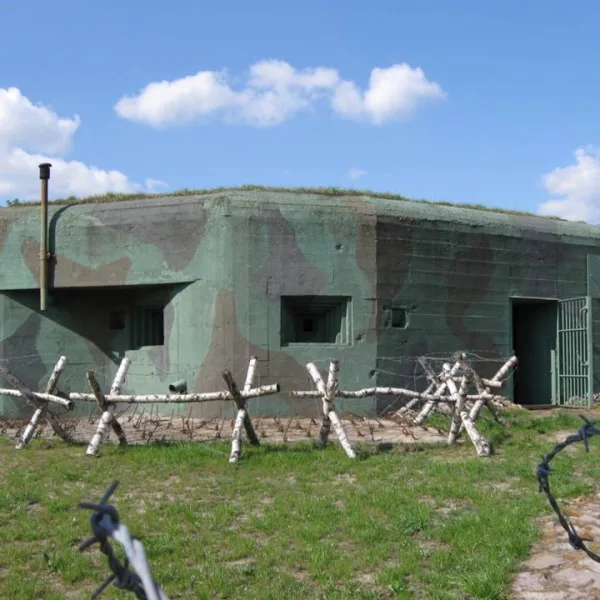
In Węgierska Górka the Heavy Combat Bunker “Wędrowiec” is one of four concrete bunkers that defended Poland's southern border in September 1939. It is now a monument and a place of remembrance of that defence. For similar themes, see the Places of Remembrance section, and for industrial heritage the Industry and Technology category. Sacred monuments have their own section, Churches and Monasteries.
How can you combine several monuments in one trip?
It is easiest to build a route around one district or valley, as the sites in this section are scattered across the voivodeship. The sets below group addresses in the same area, so they do not need long drives. Before setting off, check on the cards which interiors are open, as some buildings now serve as offices.
- Niegowa commune: Bobolice Castle and Mirów Castle are neighbours on the upland, a good idea for a single day.
- Dąbrowa Basin: Będzin Castle and the Mieroszewski Palace in the same town, plus the Dietel Palace in neighbouring Sosnowiec.
- Cieszyn Silesia: the palaces in Zebrzydowice and Kończyce Wielkie are neighbours in Cieszyn county.
- Żywiec area: the Chinese House in Żywiec, the Inn in Jeleśnia and the Manor House in Łodygowice give a survey of three periods and materials.
- Around Racibórz: Racibórz Castle on Ostróg and the palace ruin in Sławików, a range of states of preservation from complete to very poor.
- Toszek: the castle and town hall in a single walk, with the castle above the old town and the town hall on the square.
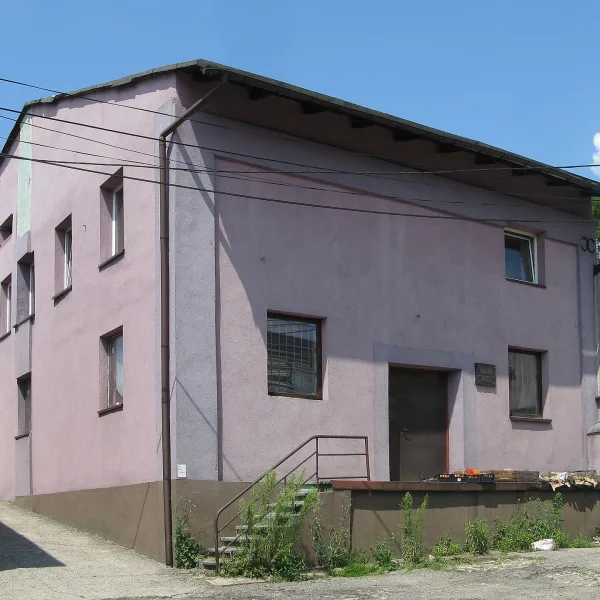
Keep a separate visit for Pszczyna. There the former synagogue in Pszczyna from 1835 stands on Bramkowa Street, a few steps from the square; it was converted into a cinema from 1941 and has lost its original decoration. It remains a record of the local Jewish community, and in the same county, at Kobiór, you can see the Promnice Hunting Palace.
If you would rather plan by theme than by place, turn to the articles. Two Cieszyn Collections tells the story of the Tschammer library and the Szersznik museum, and wider background comes from the Museums section, a natural next step after a castle.
Frequently asked questions
Which castles are worth seeing in Silesia?
To begin, choose the ruins of Ogrodzieniec Castle and the rebuilt castle in Bobolice on the upland, and the town castles in Będzin, Racibórz and Gliwice. The town castles house museums or exhibitions, so they work well in poorer weather.
What is the Trail of the Eagles' Nests?
It is a system of medieval fortresses on the Kraków-Częstochowa Upland. In the Silesian Voivodeship it includes the castles at Ogrodzieniec, Bobolice and Olsztyn and the ruin at Morsko, among others.
Which palaces in Silesia can you visit?
The Mieroszewski Palace in Będzin, the Czecz Palace in Kozy and the palace in Rybna operate as cultural institutions or museums, among others. Some residences are not accessible, such as Załęże Palace, which houses a hospital, so check before you go.
Where are the most interesting monuments in Katowice?
Most addresses are in the city centre, including Hotel Monopol on Dworcowa Street and the Goldstein Palace on Plac Wolności. In Załęże stands the palace of the former Giesche management.

 Historic sites